You’re Looking Back in Time When You Look at a Star!
By Seoji Lee
When you look at a star, are you seeing what’s happening at the moment there right now? When you look at the sun, you are not seeing it in the same time frame on Earth. it right now: Since the sunlight takes about eight minutes to reach Earth, you are seeing a version of it as it was about eight minutes ago. If the sun somehow changed during this period, we would not see that change until roughly eight minutes later. The reason is that light travels incredibly fast, but it still takes time to cross huge distances such as the distances between stars. It applies to every object we see in space because all the light reaching us takes time to travel.
The speed of light is about 300,000 kilometers per second. A light year is a distance light travels in one year. It takes only a few billionth of a second for light to travel across a room once a room is switched on. In reality, huge distances such as in space are so enormous that the time light takes to cross is noticeable. Earth’s closest companion, the Moon, is far away from Earth at about 390,000 kilometers—so the light takes around 1.3 seconds to travel the distance to Earth. Therefore, when we look at the Moon, we are looking at the Moon as it was 1.3 seconds earlier.

However, it can take millions and billions of years to travel galaxies. For example, when we look at Proxima Centauri, the nearest star beyond our Sun, is about 4.24 light years away, so the light takes roughly 4.24 years to reach there. Furthermore, The Andromeda Galaxy is about 2.5 million light years away, so when you see Andromeda, you are seeing it approximately 2.5 million years in the past. NASA points out that the light we see today Andromeda left around the era when early human ancestors were using stone tools. Eight Minutes sounds small. Two and a half million years does not.
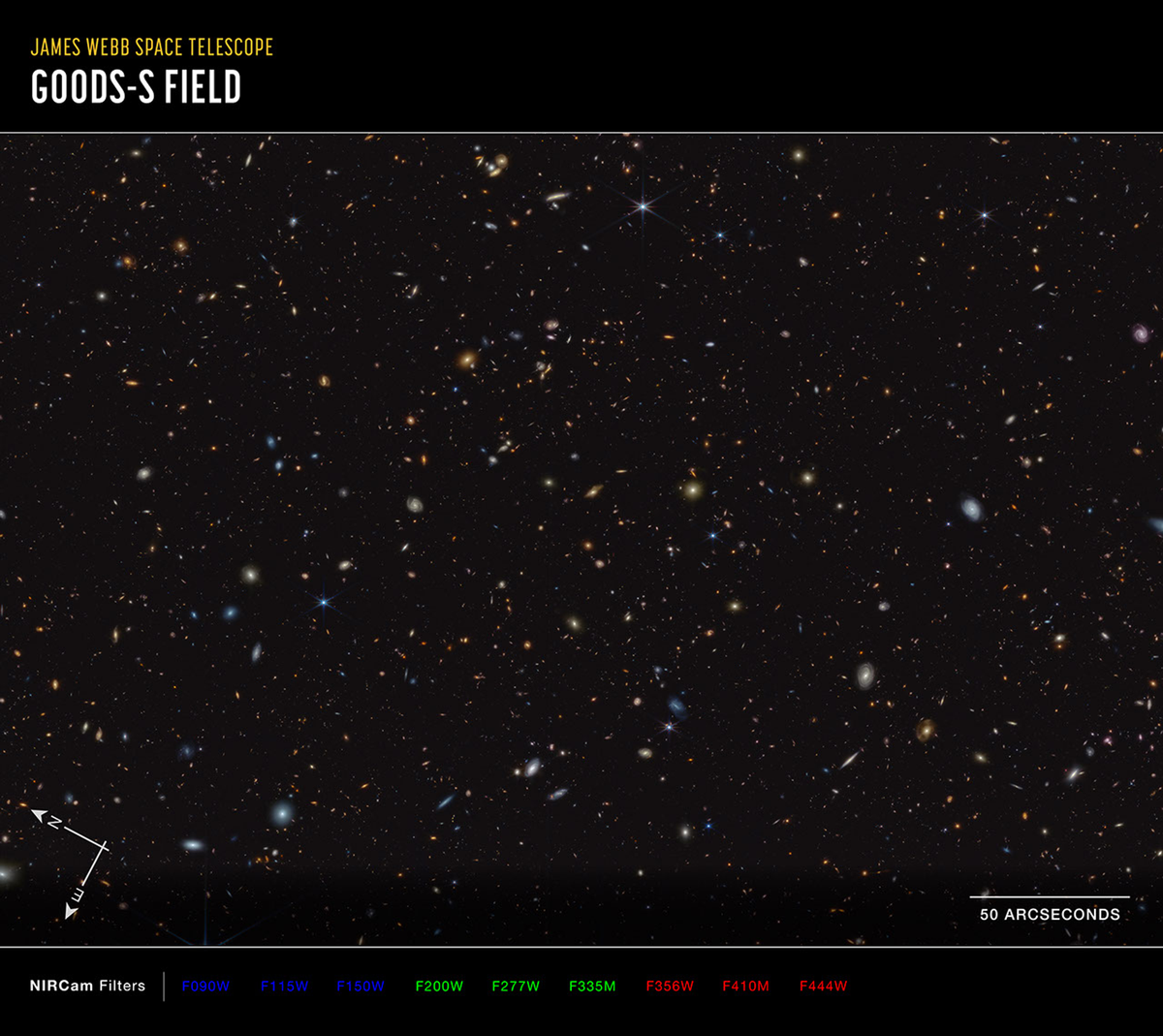
You may ask, “So, are telescopes basically time machines?” Not really—they collect light that has been traveling toward Earth for a very long time, but they do not send us backward through time. That is why astronomers can study earlier periods of cosmic history. NASA describes telescopes as essentially the closest astronomy gets to operating a time machine. Actually, Webb has observed galaxies whose light began traveling more than 13 billion years ago, which means that we are seeing those galaxies when the universe was only a few hundred million years old.
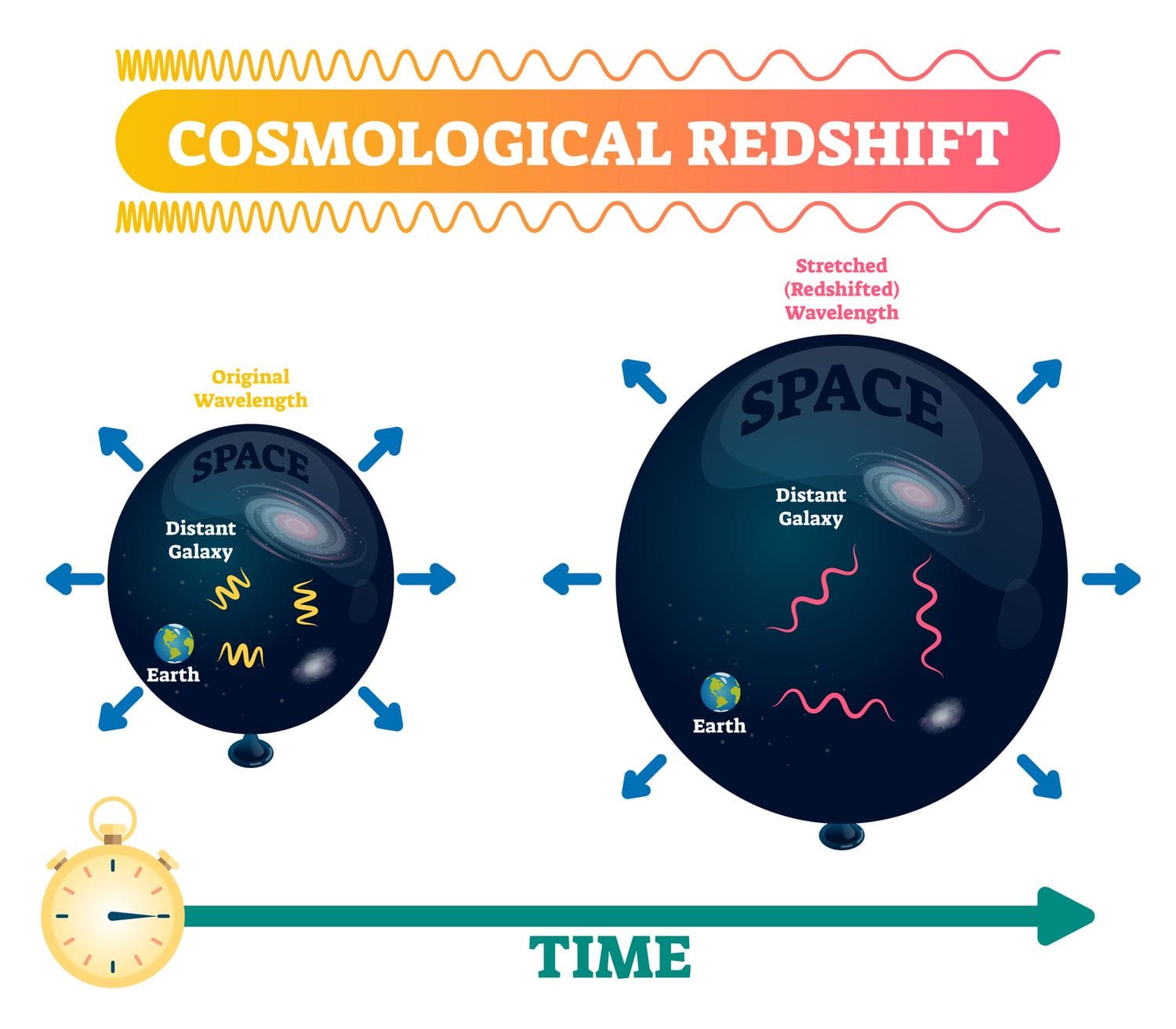
According to NASA, the space that light travels expands as the universe expands too, which stretches the light toward longer wavelengths. This is called a Cosmological Redshift. Light from extremely distant early galaxies could be shifted into infrared wavelengths, which was one reason JWST was designed to detect infrared light.
Light from the Moon takes a little over one second to reach Earth, while sunlight takes about eight minutes. For distant galaxies, that travel time can be millions or even billions of years. But the main idea is simple: every object you see when you look up at the sky is showing you a different moment in history.